

How Long Do Floor Graphics Last?
FEBRUARY 10, 2026| Speedpro Monmouth County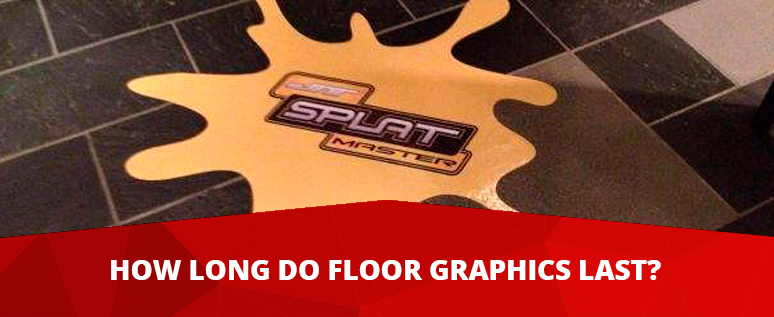
How Long Do Floor Graphics Last? A Practical Guide for Commercial Spaces
JANUARY 21, 2026| SpeedProNJShore
Floor graphics and decals turn unused spaces into valuable branding and wayfinding tools. In places such as retail stores, stadiums, and convention centers, they help guide visitors, support campaigns, and enhance the overall experience.
Most floor graphics last about six months, though their lifespan varies based on indoor or outdoor placement, foot traffic, and the quality of installation and maintenance.
If you need durable floor graphics that keep your message clear, SpeedPro has high-quality options for tough environments.
Contact us to get started.
Lifespan Differences: Indoor vs Outdoor Floor Graphics
The lifespan of your floor graphics depends on whether they are used indoors or outdoors. Many are used inside retail and commercial buildings, but they can also be placed outside on concrete sidewalks, asphalt parking lots, and walkways.
Outdoor graphics are exposed to rain, snow, ice, and sunlight, which accelerate wear. Temperature changes can also weaken the adhesive, leading to peeling.
To extend the life and adhesion of outdoor graphics:
- Select a smooth, even surface of asphalt or concrete that is free from cracks.
- Fill holes before installation and allow the filler to fully cure.
- Avoid low areas where water collects.
- Use heat to help the vinyl conform to pavement seams and textures.
Since outdoor graphics face tougher conditions, they need stronger materials, especially protective laminates. Even with these, outdoor graphics still do not last as long.
Typical performance:
- Indoor applications: approximately 6–12 months
- Outdoor applications: approximately 3 months
Surface Preparation for Longer-Lasting Floor Graphics
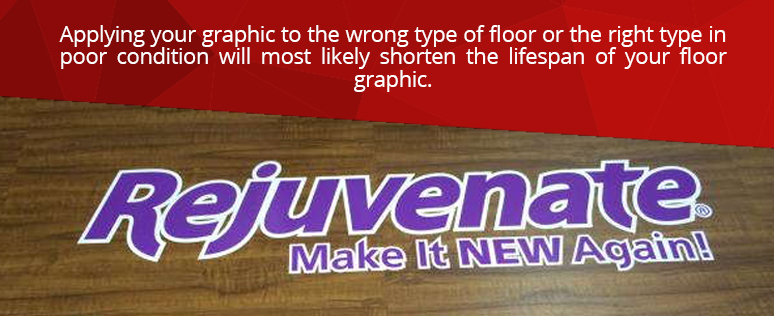
The type and condition of the floor play a big role in how long a floor graphic lasts. Even indoors, using the wrong surface or poor preparation can make the graphic wear out sooner.
Most floor graphics work best on smooth, non-porous surfaces, such as tile, vinyl, and sealed wood. Some can be used on low-pile carpet, but only if they are specifically designed for that purpose.
Before installing, prepare the floor so the adhesive adheres well. For best results:
- Avoid waxing the floor for at least 24 hours after installation.
- Clean the area with a mild detergent and dry with a lint-free cloth.
- Wipe with rubbing alcohol to remove grease and residue.
- Keep graphics away from grout lines, seams, or uneven edges that can trap air.
Preparing the floor correctly helps prevent peeling, enhances the adhesive’s effectiveness, and prolongs the life of your graphics.
Want floor graphics that last? Contact us for expert advice and a custom quote.
Why Material Selection Matters for Floor Graphics

The surface matters, but how the floor graphic is made is also important for durability and safety. Most floor graphics have three main layers:
- Adhesive: Bonds the graphic securely to the floor. Adhesives may be formulated for short-term messaging with easy removal or for longer-term performance.
- Substrate: The printed vinyl layer that carries the design. The substrate type and print quality directly affect image clarity, color retention, and overall resilience.
- Protective laminate: A top coating that prevents abrasion and offers a slip-resistant surface for pedestrian safety. Outdoor graphics often use a more textured laminate to handle weather exposure and provide added traction.
Each layer is available in various quality levels. Selecting higher-quality materials increases longevity, visibility, and safety. The SpeedPro team can recommend the best vinyl, adhesive, and laminate for your needs.
Ensure your floor graphics perform effectively in real-world settings. Consult Speedpro Imaging of Monmouth County for material recommendations, installation guidance, and lasting results.
Foot Traffic and Floor Graphic Wear
Even if you install floor graphics at the same time and use the same materials, they can wear out at different rates depending on the amount of foot traffic they receive. It is essential for graphics to be visible, but excessive use can cause them to wear out more quickly.
To maximize lifespan and visibility, place graphics where they are easily seen but not constantly walked on. Avoid:
- Building entrances where all visitors must walk through
- Areas where water, dirt, or debris is frequently tracked
- Locations where carts or equipment roll over graphics
The ideal locations are just off high-traffic paths, making graphics visible without excessive wear.
In some cases, such as wayfinding, heavy foot traffic is unavoidable. If graphics support navigation or safety, plan for more frequent replacement in those areas.
Increase visibility without sacrificing durability. SpeedPro can help you identify optimal locations for your graphics. Contact us to get started.
Installation Best Practices for Floor Graphics
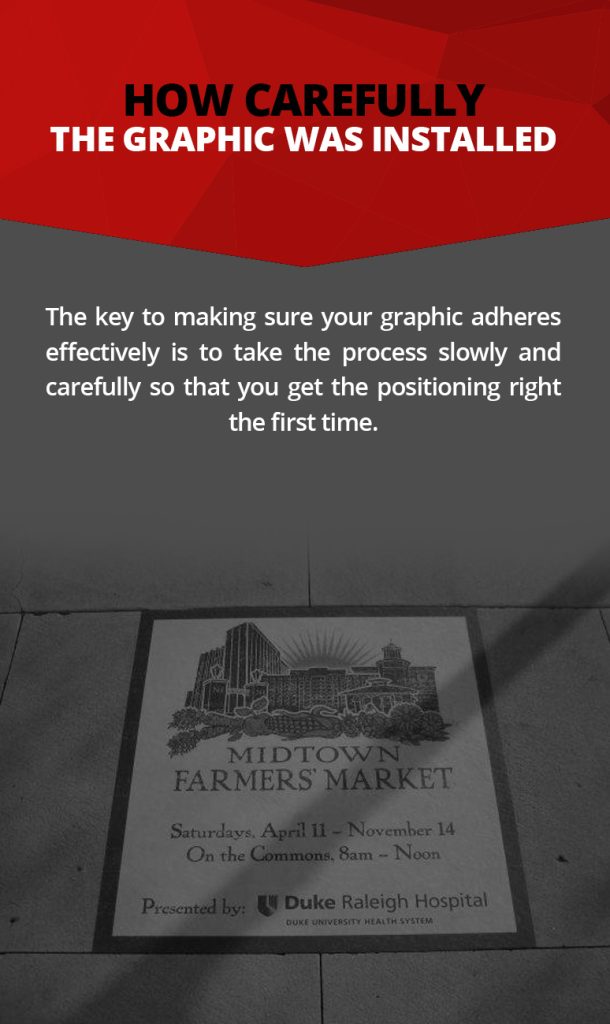
Proper installation is essential for maximizing the lifespan of floor graphics. If the material is not applied smoothly and securely, peeling and edge lift may occur prematurely.
For best results during installation:
- Position the graphic carefully to avoid unnecessary lifting or reapplication.
- Remove backing gradually (4 inches at a time) to maintain control.
- Use a squeegee or similar tool to press out all air bubbles.
- Allow at least 24 hours of curing time before cleaning or foot traffic.
Correct installation seals out moisture, improves adhesion, and maintains a smooth surface, all of which support durability and safety.
Achieve professional, long-lasting results. Contact us for expert installation support and high-performance floor graphics designed for demanding environments.
Maintenance Best Practices for Floor Graphics
Regular maintenance is essential for preserving the appearance of floor graphics. Even durable materials can fail prematurely if exposed to abrasion, moisture, or harsh cleaning agents.
Protect floor graphics by avoiding:
- Buffing and burnishing, unless the graphic is fully wax-coated.
- Dragging heavy items like crates, pallets, or equipment over the surface.
- Harsh chemicals that can break down the laminate.
- Standing water can weaken adhesion and cause edge lift.
- Placing graphics where forklifts and carts are common, such as in warehouse environments.
Clean graphics with mild soapy water and a scratch-free cloth to avoid damaging the laminate. The SpeedPro team can recommend maintenance methods tailored to your material and environment.
Protect your investment and maintain message clarity. Contact us for guidance on care and replacement schedules tailored to your traffic demands.
When Should I Replace Floor Graphics?
Even with proper installation and care, floor graphics will eventually need to be replaced. Over time, adhesive fatigue, abrasion, and environmental exposure can affect both the appearance and safety of the product.
Plan to replace floor graphics when you notice:
- Peeling, curling, or edge lift can create a trip hazard.
- Surface wear, scratches, or fading that reduce the legibility of the message.
- Laminate breakdown that exposes the printed layer.
- Hazard or wayfinding graphics no longer clearly communicate instructions.
- Brand or promotional graphics that look worn or outdated.
In commercial and municipal settings, safety compliance is essential. Remove any floor graphic that poses a slip or trip risk immediately. Regular inspections help identify wear before it becomes a liability.
Lifecycle planning also matters for high-traffic spaces such as retail, healthcare, and event venues. By estimating replacement intervals upfront — typically every 3 to 12 months depending on conditions — businesses can ensure consistent brand quality and visitor experience.
Minimize disruptions and safety risks. We are your partner for proactive replacement planning and durable floor graphics that deliver consistent performance.
Get Quality Floor Graphics From SpeedPro
Floor graphics should provide strong visual impact and withstand real-world conditions. SpeedPro utilizes high-performance materials, slip-resistant laminates, and advanced print technology to ensure your message remains clear and durable, both indoors and outdoors.
With over 120 studios nationwide, our experts offer local support backed by a trusted national brand. From concept to installation, we help organizations select solutions tailored to their environment, traffic demands, and design goals.
Transform your floor space into an effective communication tool. Contact us to discover how professional floor graphics can enhance your environment.

Frequently Asked Questions About Floor Graphics
- Where can floor graphics be installed?
Floor graphics adhere best to smooth, clean, non-porous surfaces such as tile, sealed concrete, vinyl, and finished wood. Some products are made specifically for low-pile carpet or textured concrete. We can help evaluate your space.
- What’s the best way to clean floor graphics without damaging them?
Use mild soapy water and a soft cloth or mop. Avoid abrasive scrubbers, acids, disinfectant chemicals, and pressure washing. These can damage the laminate and reduce the lifespan of the graphic.
- Can floor graphics be used for wayfinding?
Absolutely. Floor graphics are an excellent tool for guiding pedestrians and marking queues. Please note that directional graphics in high-traffic areas may require more frequent replacement.
- Can floor graphics withstand heavy equipment?
Graphics in warehouses, loading zones, or industrial spaces may be exposed to forklifts, pallet jacks, and carts. Heavy-duty materials help, but rolling loads will cause faster wear and require planned replacements.
- Why choose SpeedPro for floor graphics?
SpeedPro utilizes premium adhesives, durable laminates, and expert production techniques to ensure clarity, safety, and longevity. With more than 120 studios nationwide, we provide local support backed by the strength of a trusted national brand.