


From historic buildings and multi-tenant offices to modern medical campuses and retail centers, directional signs in Boston help people move through spaces with confidence and ease.
In a city known for layered architecture, irregular layouts, and shared-use properties, clear directional signage isn’t optional. It reduces confusion, improves accessibility, and shapes how your business or facility is experienced from the moment someone arrives.
Directional Signs That Shape How Boston Businesses Are Experienced
Boston is not a simple grid. Visitors move between winding streets, older buildings, newer developments, and multi-use properties every day. Inside those spaces, confusion slows people down and creates friction. Directional signs remove that friction by guiding customers, patients, tenants, and staff exactly where they need to go.
At SpeedPro Boston North, we design and produce custom directional signs that fit Boston’s unique mix of historic architecture, dense commercial corridors, and modern interiors.
How Directional Signage Transforms the Boston Business Experience?
Directional signs are not decoration. They are functional tools that influence how people perceive your business, how quickly they find services, and how accessible your space truly is.
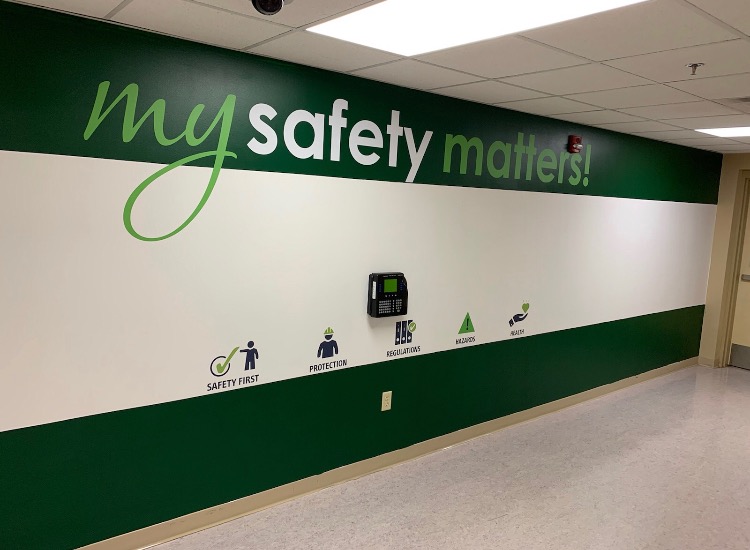
Improved Customer Experience
Clear directions reduce hesitation and frustration. Visitors spend less time asking for help and more time engaging with your business.
Better Traffic Flow
Directional signs manage foot traffic in busy environments such as hospitals, schools, warehouses, and corporate offices. This is especially important in Boston properties with multiple entrances and levels.
Stronger Professional Image
Consistent, well-designed signage signals organization and attention to detail. In competitive Boston markets, that perception matters.
Reduced Staff Disruption
Employees spend less time giving directions, allowing them to focus on their core responsibilities.
Accessibility and Compliance
Properly designed directional signs support ADA requirements and make spaces usable for everyone.

Directional Sign Types: A Strategic Tool for Your Business
Directional signage systems are rarely one-size-fits-all. Most Boston properties require a coordinated mix of sign types to support navigation indoors and outdoors.

Interior Directional Signage
Used in tradeshows, offices, hospitals, schools, and multi-tenant buildings to guide people to departments, restrooms, elevators, exits, and shared spaces.
Directory Signs
Static or modular directories at entrances or elevator lobbies that show tenant listings, departments, or floor layouts.
Parking and Garage Directional Signs
Critical for Boston properties, where parking structures, surface lots, and shared garages can be confusing.
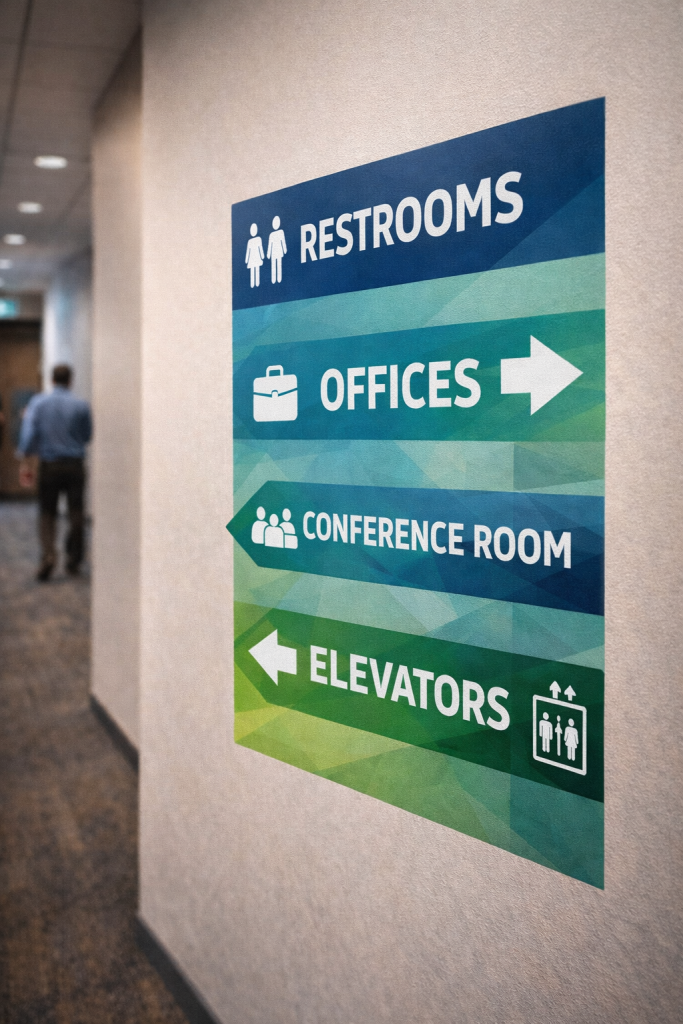
Wayfinding Wall Graphics
Large-format graphics, directional signs with arrows, and text are applied directly to walls or panels. These work well in modern offices, healthcare facilities, and university buildings.
Exterior Directional Signs
Ground-mounted or wall-mounted signs that guide visitors to entrances, loading areas, drop-off zones, or specific buildings on a campus.
ADA Directional Signs
Tactile and visual signs that meet accessibility standards while still aligning with your overall sign system.
Selecting Materials for Boston’s Demands: Durability, Readability, and Aesthetics
Boston’s climate, building styles, and usage demands all influence material selection. We help clients choose materials that balance durability, readability, and aesthetics.
Aluminum Panels
Common for both interior and exterior directional signs. Lightweight, corrosion-resistant, and ideal for Boston’s seasonal weather changes.
Acrylic Signs
Often used in office lobbies and corporate interiors. Acrylic offers a clean, modern look and works well for directories and interior wayfinding signage.
PVC and Composite Panels
Cost-effective options for interior directional signage, especially in large facilities with frequent updates.
Vinyl Graphics
Used for wall graphics, temporary directions, or cost-efficient updates. High-quality vinyl provides strong contrast and clean edges.
Photopolymer and Tactile Substrates
Required for ADA directional signs. These materials allow raised characters and braille while maintaining durability.
Protective Finishes
Matte finishes reduce glare, which is critical in well-lit Boston offices and medical facilities.
ADA and Compliance Guidelines for Directional Signs
Directional signage must do more than look good. It must follow accessibility and safety standards.
ADA Design Considerations
- Raised tactile lettering and Grade 2 braille for required directional signs
- High visual contrast between text and background
- Non-glare finishes for readability
- Sans-serif, easy-to-read fonts
ADA Installation Guidelines
- Proper mounting heights for tactile signs
- Consistent placement near doorways and decision points
- Clear spacing around signs for approach and readability
Local and Building Considerations
Boston’s older buildings and renovated spaces often require thoughtful placement to balance compliance with architectural constraints. Directional signs must support life-safety pathways, exits, and circulation without adding clutter. We coordinate design and placement to align with accessibility standards while respecting how your space is actually used.
Strategic Placement for Maximum Impact
Directional signs work best when placed at natural decision points. Common locations include:
- Building entrances and vestibules
- Parking garages and surface lots
- Elevator lobbies and stairwells
- Hallway intersections
- Restroom corridors
- Reception areas
- Medical and educational campuses
- Warehouses and fulfillment centers
In Boston properties with multiple tenants or floors, a clear hierarchy of indoor and outdoor directional signs prevents overload while keeping navigation intuitive.
A Collaborative Journey from Plan to Installation
1. Site Review and Planning
We review your layout, traffic flow, and user needs to identify where directional signs will have the greatest impact.
2. Material and Design Guidance
Our team recommends materials, finishes, and layouts that balance durability, compliance, and brand alignment.
3. Production and Quality Control
Wayfinding signs are produced using professional wide-format equipment to ensure clarity, consistency, and longevity.
4. Installation Coordination
We plan placement carefully so signs are visible, compliant, and logically positioned throughout your space.
5. Planning for Future Adaptability
When possible, we design modular or update-friendly sign systems that accommodate growth or tenant changes.
Clear Direction Starts with the Right Signs
Wayfinding shapes how people experience your space before a single interaction takes place. When navigation is clear, your property feels organized, accessible, and professional.
If your Boston location needs clearer interior navigation, better outdoor guidance, or a complete directional signage system, a consultation helps define the right approach.
Contact SpeedPro Boston North to discuss your directional signage needs today.