

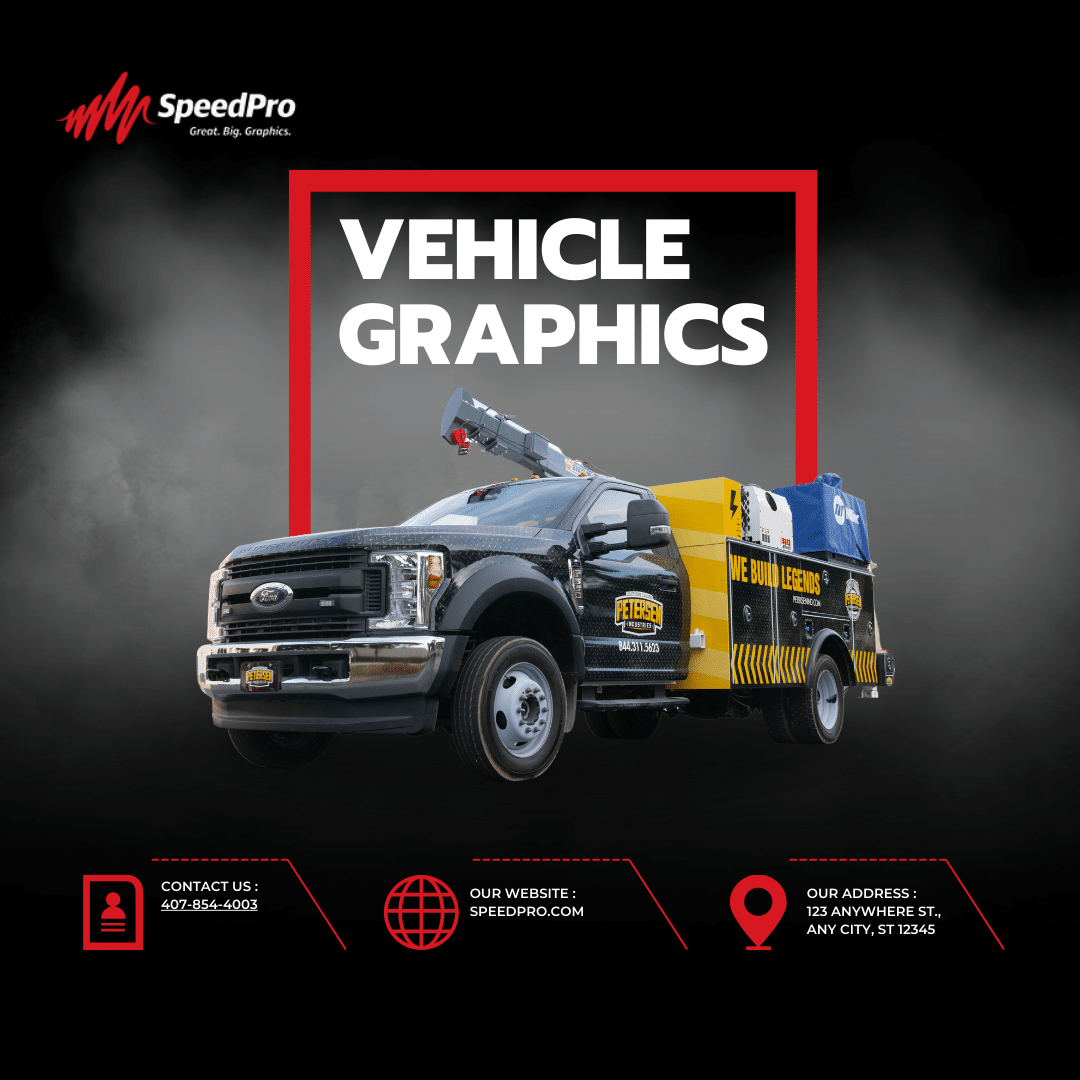
Everything You Need to Know About Vehicle Wraps
OCTOBER 5, 2023| Rachelle ChauCategories
Vehicle WrapTable of Contents
Vehicle graphics are taking the automotive and advertising industries by storm, transforming everyday vehicles into mobile advertisements or sleek custom rides. If you’ve ever seen a car with a colorful, detailed design covering its exterior or a business vehicle displaying the company’s logo and information, you’ve encountered a vehicle wrap. In this blog, we’ll delve into the ins and outs of vinyl wraps, explaining the materials used, the process, and how it all comes together.
What is a Vehicle Wrap?
A vehicle wrap is a vinyl sticker that’s applied over the original paint of the vehicle. As a matter of fact, it can be used to showcase business advertisements, create custom designs, or even protect the original paint from scratches and fading. Wraps are removable, which means you can restore the vehicle to its original state if needed.
Materials Used in Vehicle Wraps
The primary material used for vehicle wraps is vinyl, but there are different types of vinyl to consider:
- Cast Vinyl: This is a premium material that’s thin and flexible. It can contour smoothly to complex curves and is ideal for full vehicle wraps. Cast vinyl tends to last longer and is less likely to shrink over time.
- Calendered Vinyl: It’s thicker and less durable than cast vinyl but is more affordable. It’s best for flat surfaces or simple curves. It is often used for short-term applications.
Additionally, there’s a laminate layer applied on top of the vinyl to protect the wrap from UV rays, scratches, and contaminants. To read more about cast vs. calendered vinyl, read our blog.
The Vehicle Wrap Process
The vehicle wrap process involves a few essential steps:
- Design: The process begins with creating a custom design for the vehicle. Graphics software models the vehicle’s dimensions, ensuring the design fits perfectly.
- Printing: Once the design is finalized, it’s printed onto the vinyl material using specialized large-format printers that can handle the large size and detail of the graphics.
- Preparation: The vehicle should be cleaned thoroughly. This involves washing the exterior to remove any dirt, grease, or wax and then using a special solution to prep the surface.
- Application: Applying the wrap requires skill. Carefully placing the printed vinyl on the vehicle, the installer smooths it out to remove any bubbles or wrinkles. Then the professional, trims the wrap around the edges, door handles, and other obstructions.
- Post Heating: Some areas, especially those with deep curves, may need post-heating with a heat gun. This ensures the vinyl adheres properly and lasts longer.
How Does It Work?
The principle behind a vehicle wrap is straightforward:
- Adhesion: The vinyl comes with an adhesive back, which allows it to stick to the vehicle’s surface.
- Conformability: Due to its flexible nature, vinyl can conform to the various contours of a vehicle, making it look like a custom paint job.
- Protection: Beyond aesthetics, the vinyl wrap also serves as a protective layer against minor scratches, UV rays, and contaminants.
Conclusion
Vehicle wraps offer a unique combination of advertising potential and customization. Whether you’re a business owner looking to increase brand visibility or a car enthusiast wanting to give your ride a fresh look, vehicle wraps are a durable, cost-effective, and reversible solution. Always consult with a professional installer to ensure you get the best results for your investment.